
PRESS RELEASE: Celebrating International Vulture Awareness Day: Encouraging Signs for Cambodia’s Vultures Reinforce the Need for Sustained Conservation Action
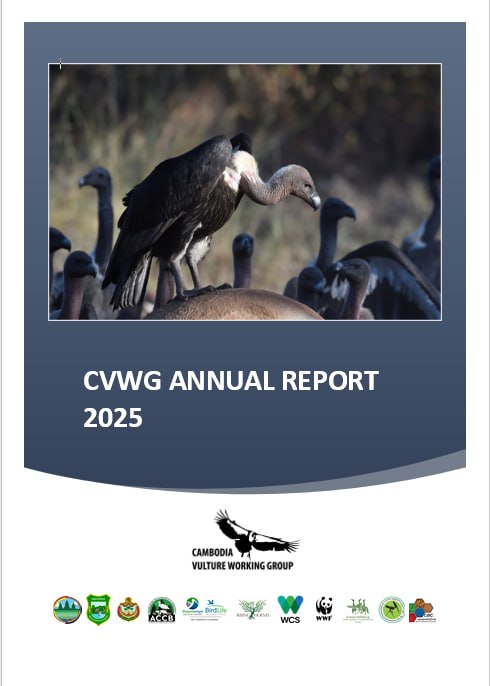
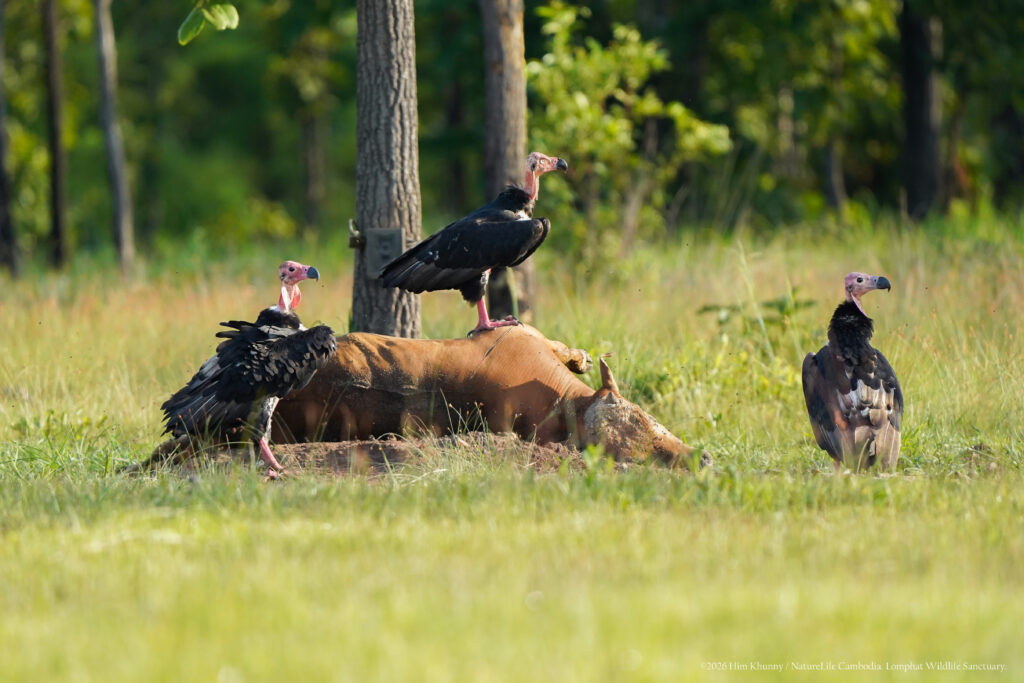
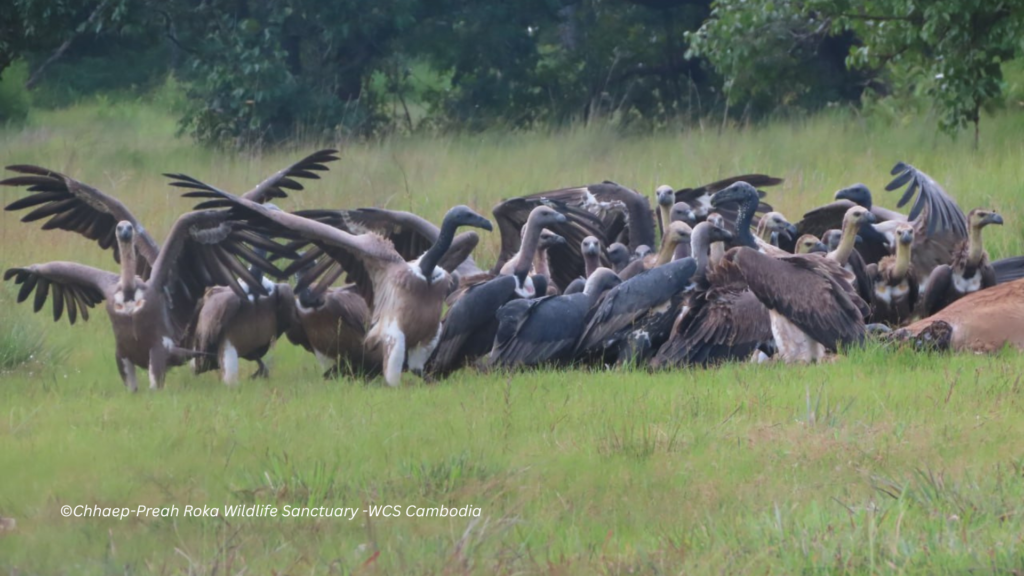
Across much of Southeast Asia, vulture populations have suffered catastrophic declines and have disappeared entirely from many parts of their former range. Cambodia remains one of the last strongholds for vultures in the region, with remnant populations of three Critically Endangered species—the White-rumped Vulture, Slender-billed Vulture and Red-headed Vulture—surviving in the dry forest landscapes of northern and eastern Cambodia. These remaining populations are therefore of exceptional national, regional and global conservation importance, making their continued protection a high priority for Cambodia and its conservation partners.
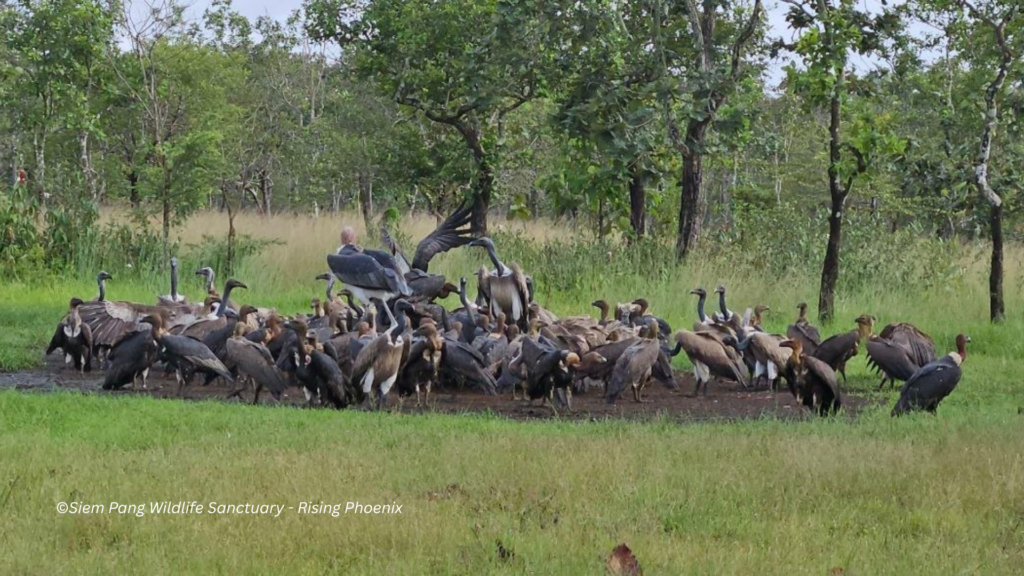
As vulture populations declined dramatically across the region, targeted conservation efforts in Cambodia began more than 20 years ago through collaboration between government agencies and conservation organisations. In 2017, this partnership was formally established as the Cambodia Vulture Working Group (CVWG), a multi-stakeholder conservation platform comprising representatives from relevant government ministries and agencies, national and international conservation organisations, research institutions, and ecotourism partners. Members include the Ministry of Environment and its General Directorate of Natural Protected Areas, the Forestry Administration, the Department of Animal Health and Production, Angkor Centre for Conservation of Biodiversity, NatureLife Cambodia, Rising Phoenix, Wildlife Conservation Society, World-Wide Fund for Nature, Sam Veasna Conservation Tours, Cambodia Bird Guide Association, and the Centre for Biodiversity Conservation. The CVWG provides a platform for coordinated monitoring, research and conservation action in support of Cambodia’s national vulture conservation priorities. Over the last two decades, Cambodian Vultures have faced a series of threats, including decreasing food availability, habitat loss, and more recently incidental poisoning. Over this time, the CVWG members have continued to monitor the vultures and their threats and have carried out numerous actions to protect them. Last year, the results of this conservation work were analysed for the past decade and published in the Cambodian Journal of Natural History. Vultures are monitored by conducting synchronised counts five times a year at feeding sites, comprising five locations in the remote forest areas within dry forest landscapes of northern and eastern Cambodia.
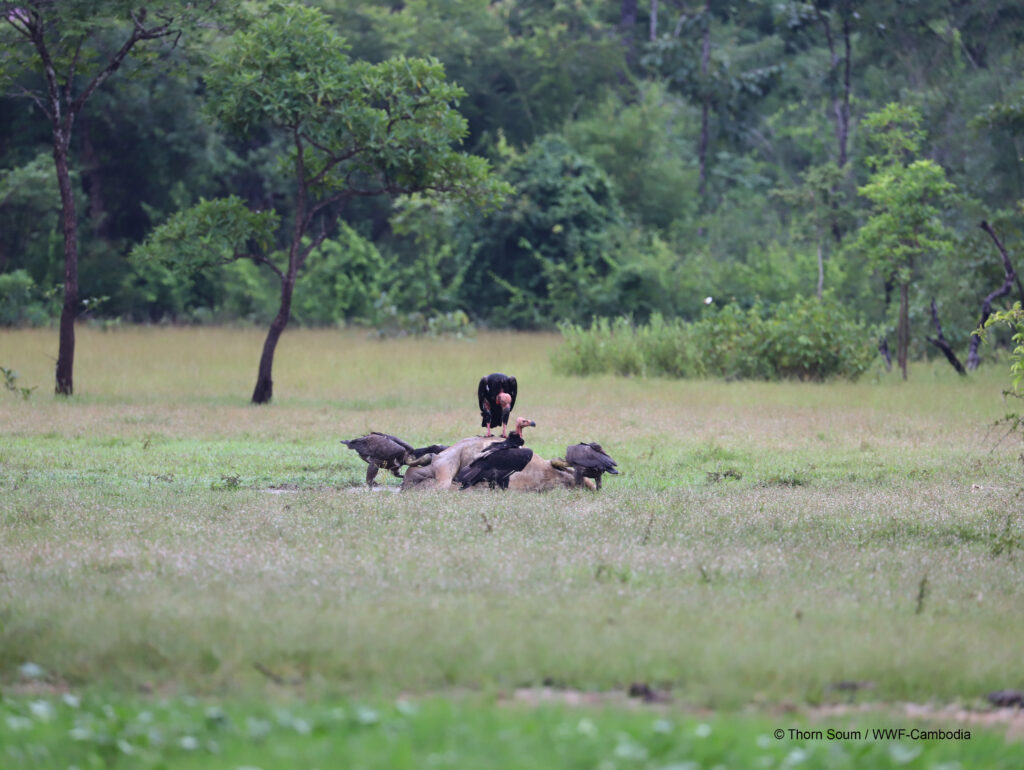
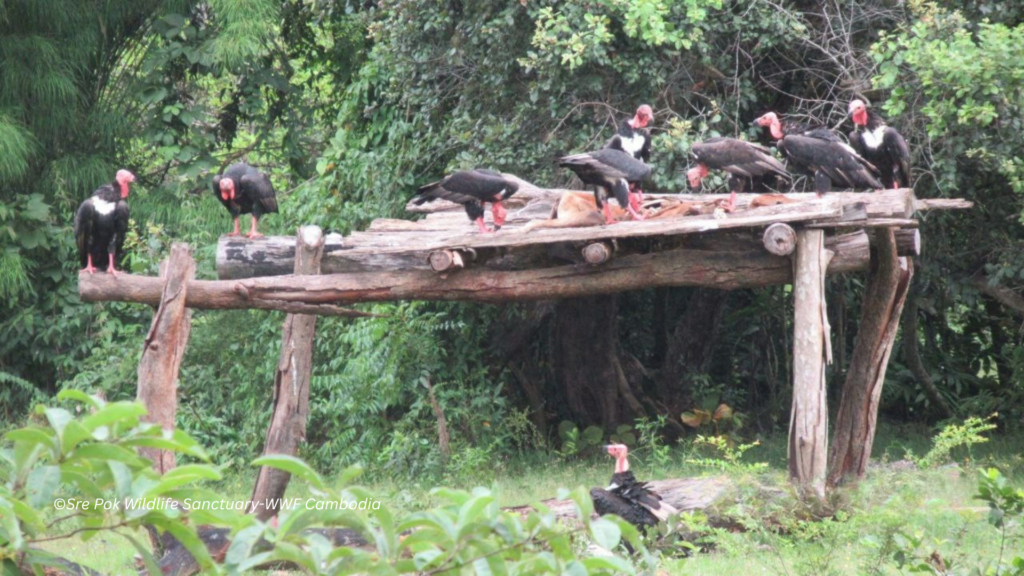
Analysis of monitoring data collected from these sites between 2014 and 2024 provided some encouraging indications that long-term conservation efforts are helping to stabilise Cambodia’s remaining vulture populations. Following a prolonged period of decline, monitoring results provide encouraging signs for Cambodia’s remaining vultures. White-rumped Vultures, the most numerous of the three species, appear to have responded positively to increased supplementary feeding at Siem Pang and Chhaeb–Preah Roka Wildlife Sanctuaries, with numbers showing signs of stabilisation. Although populations of the other two species remain smaller, Slender-billed Vulture numbers appear relatively stable, while Red-headed Vultures continue to be regularly recorded across five wildlife sanctuaries—Lomphat, Siem Pang, Chhaeb–Preah Roka, Sambo and Srepok. These findings are encouraging, but continued conservation action remains essential to sustain and build upon this progress. This encouraging analysis appears to be confirmed by survey results since the paper was published. In 2025, the CVWG Annual Report produced the official Minimum Population Estimate for that year, for which 163 vultures of all three species were counted; a 22% increase from the 2024 result, and the highest annual count since 2016.
Cambodian Vulture conservationists are cautiously optimistic. Mr. Alistair Mould, vice-chairman of CVWG believes that ‘These results give us reason for cautious optimism and demonstrate that sustained, targeted conservation action can make a real difference for Cambodia’s vultures. However, these species remain Critically Endangered, and maintaining this progress will require continued collaboration between government, conservation partners and local communities to address the threats they continue to face. “To secure the long-term survival of Cambodia’s vultures, the CVWG is developing the next 10-year Vulture Conservation Action Plan,” he added.
“As the government agency responsible for Cambodia’s protected areas, the Ministry of Environment is encouraged by the 22% increase in the vulture population, which demonstrates the strong collaboration between government agencies and NGO partners to protect vulture habitats and implement conservation actions in line with government policies,” said H.E. Khvay Atitya, Undersecretary of State and Spokesperson for the Ministry of Environment. “Cambodia supports an important population of vultures in Asia. Recognizing this important role, Cambodia will host the Asian Regional Steering Committee meeting on Vulture Conservation in October this year,” he added.
For further information, please contact:
H.E Khvay Atitya
Undersecretary of State and spokesperson of the Ministry of Environment
Phone/telegram: (855) 12 683 968
Email: khvay.atitya@moe.gov.kh
Mr. Bou Vorsak
CEO of NatureLife Cambodia (NLC),
Phone: 012 222 073
Email: vorsak@birdlifecambodia.org
Related Articles